Why a Publicity Portrait Directs the Eye
Learn how a publicity portrait steers first impressions, and use a clear checklist to describe its visible choices before drawing conclusions.
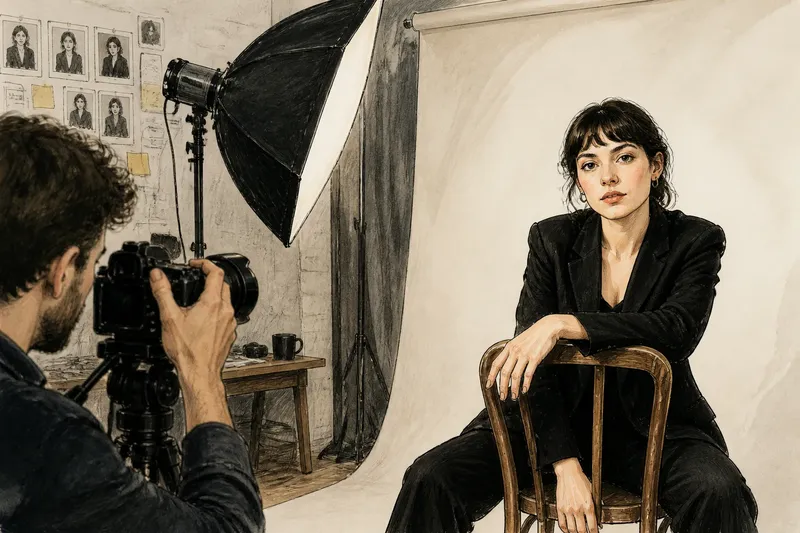
The common mistake with a publicity portrait is to describe the person before describing the picture. That shortcut can turn a chosen pose or tight crop into a claim about character, and it hides how the image has directed the viewer’s first impression. To read a publicity portrait carefully, start with what is visible: where the eye lands, what surrounds the subject and what the frame leaves out.
Notice the first point of attention
Look at the portrait briefly, then look away and name the detail you remember first. It might be the subject’s face, a bright sleeve, a hand near the camera, a dramatic shadow or an object in the background. This is a useful starting observation, not a verdict about what the image means.
Visual attention is shaped by contrast, placement, clarity and scale. A sharply lit face against a dark wall can draw the eye quickly; a vivid prop near the edge may compete with it. Ask whether the picture has one obvious centre or several points of interest. If attention moves, note the route: from a hand to a face, perhaps, or from a face to a sign.
Do not assume that the most prominent detail was chosen to express a particular emotion or personality. You can say that a bright scarf attracts attention, for example, without claiming it makes the subject seem confident. The first statement describes an effect of the image; the second interprets that effect.
Separate pose from expression
A pose is the arrangement of the body in the frame: the angle of the shoulders, the direction of the head, the position of the hands and the distance from the camera. Expression is the visible configuration of the face at the moment represented. Describe these separately, since a turned shoulder and a smile are different choices and may guide attention in different ways.
Record the subject’s gaze precisely. Are they looking towards the lens, beyond it, downwards or towards another person? A direct gaze can make the viewer feel addressed; a sideways gaze can lead the eye towards something else. Those are possible viewing effects, not reliable evidence of what the performer thinks or feels.
Notice whether the pose is open, folded, leaning, upright or partly concealed, using ordinary descriptions rather than loaded labels. “One arm crosses the torso” is more grounded than “defensive”. If the hands are visible, describe what they touch or hold. Their placement may establish a visual connection between the person and a prop, costume detail or part of the setting.
Read the crop as an editorial choice
The crop is the boundary of the photograph: what remains inside the frame and what has been excluded. A close crop can make a face or costume detail dominate, while a wider view gives the setting and body more room. Neither format tells you, on its own, why the picture was made that way.
Check where the frame cuts across the body and whether there is space in the direction of the subject’s gaze or movement. A face near the left edge looking right may pull attention into the open space. A face looking out of the frame can instead create a sense of distance or interruption, depending on the other visible elements.
Look for objects cut off by the border. A sliver of furniture, a partial sign or the edge of another person may suggest that more lies beyond the image, but it does not identify what is outside it. Keep that distinction clear when describing a cropped publicity still or press portrait.
Describe how the setting shares the frame
A setting can identify a place, provide visual texture or compete with the subject. Note what is actually recognisable: a studio backdrop, a theatre curtain, a doorway, a street surface or an indistinct interior. If the location is not clear from the image, describe its visible features rather than naming a venue.
Separate background detail from context you already know. A portrait made to promote a screen role may show a costume or set dressing, but the image alone may not tell you whether the subject is appearing as a character or as themselves. Captions and publicity materials can supply information, yet your description should distinguish that information from what the frame itself shows.
Lighting also sets the relationship between subject and surroundings. A bright face against a subdued background stands apart; even illumination may make the scene feel more continuous. Describe the contrast, shadow or reflection you can see without treating lighting as proof of a mood or a specific production method.
Use this checklist before interpreting a publicity portrait
Write down observable details first. A short inventory gives you a firm basis for later interpretation and makes it easier to see which impressions come from the photograph and which come from your assumptions.
- First point of attention: Name the detail you noticed first. If several elements compete, record them in order rather than forcing a single centre.
- Pose: Describe the position of the head, shoulders, arms and hands. If a limb is outside the frame, say it is not visible rather than guessing its position.
- Gaze and expression: State where the eyes are directed and describe visible facial features. Avoid converting a look into a definite emotion.
- Crop: Note how close the camera appears, where the frame cuts the body and what has been excluded. Decide whether the setting can be described in detail or only in part.
- Setting and props: List objects and background features that can be identified. If their purpose or location is uncertain, leave that open.
- Visual emphasis: Record contrasts in light, colour, sharpness or scale. Decide which detail is most prominent and which supports it.
- Evidence boundary: Mark any idea about personality, intention or story as interpretation, not description. Keep it only if you can explain which visible choices led you there.
Say you are describing a performer against a pale studio wall, with one hand resting on a chair and the face turned towards the lens. You might first record that the face is the sharpest, most prominent feature, the chair occupies the lower edge and the wall contains no visible location clues. Only after that inventory would you suggest that the portrait gives the subject visual priority; you would not infer that the pose reveals their private temperament.
Why do publicity portraits make the face prominent?
A face can serve as a quick point of recognition, especially when the frame is tightly composed. The degree of prominence still depends on lighting, contrast, gaze and competing details, so describe the particular image rather than assuming every portrait uses the same visual approach.
What does a tight crop tell the viewer?
A tight crop gives less space to the body and surroundings, placing more attention on the features that remain visible. It does not, by itself, establish why the photograph was cropped or what the subject intended to communicate.
How can I describe a pose without guessing at emotion?
Name visible positions and directions: “the head tilts towards the left” or “both hands rest on the table”. Then describe any effect as a possibility, such as the pose drawing attention towards the face, rather than stating an emotion as fact.
Can the background identify a publicity portrait’s purpose?
It can offer clues, such as a visible costume, set or event backdrop, but a background alone may not settle whether the image promotes a role, appearance or public event. Keep what you can see separate from information supplied by a caption or accompanying material.
Let the description stop where the evidence stops
A strong reading does not need to turn each visual choice into a hidden message. Describe what leads the eye, how pose and crop organise the frame, and which parts of the setting remain legible. For a publicity portrait, that account is often more useful than a confident claim about the person behind it: it shows precisely how the image invites a first impression, while leaving room to question that invitation.